When most people think about retirement, they picture freedom.
Freedom from alarm clocks. Freedom from commutes. Freedom from meetings, deadlines, and busy schedules.
After decades of hard work, retirement offers something incredibly valuable—something many people spend their entire lives pursuing: time.
And while financial planning is often focused on accumulating enough money to retire comfortably, the real question isn't simply whether you'll have enough. It's what you'll do with the time you've worked so hard to create.
The Temptation of "More Stuff"
It's natural to think about the things you might buy in retirement.
A new car. A remodeled kitchen. The latest technology. A vacation home. New furniture. Another hobby that requires more equipment.
There's nothing inherently wrong with any of those purchases. But many retirees discover that possessions often provide only temporary satisfaction. The excitement fades, and the item eventually becomes just another object occupying space.
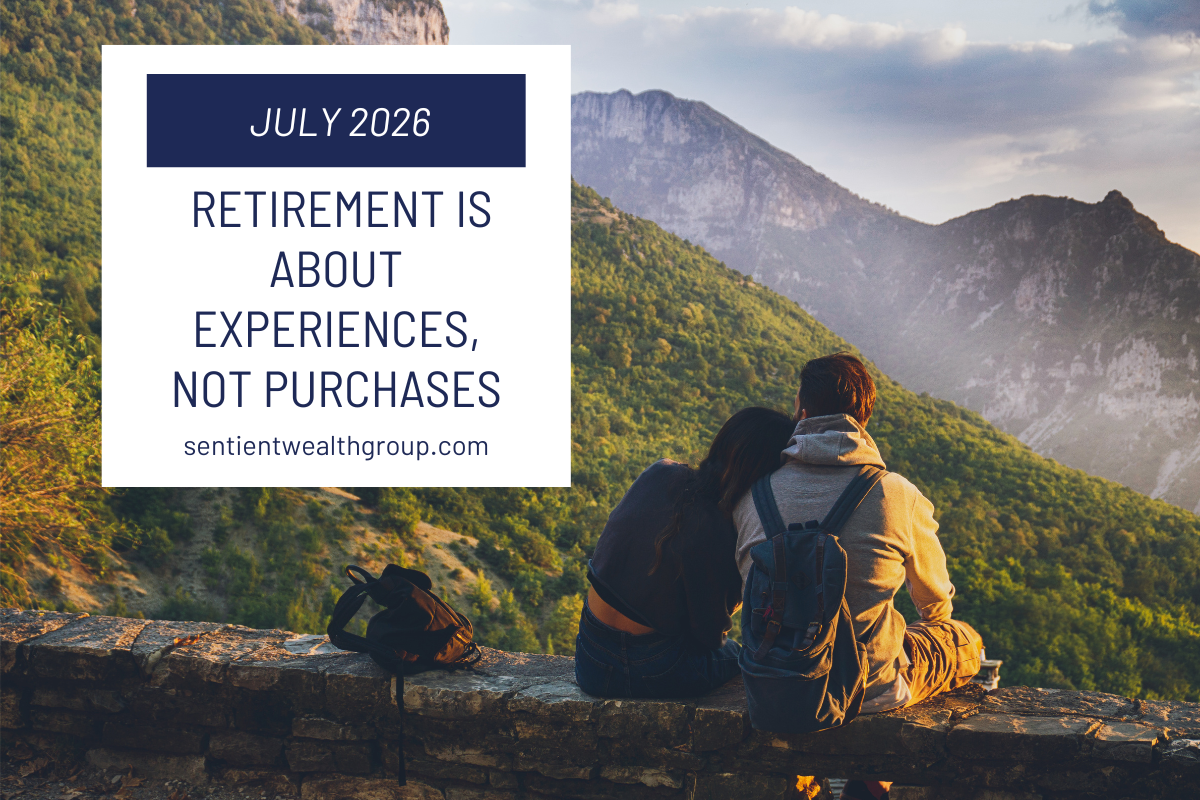
The most fulfilling retirements are rarely defined by what people own. They're defined by what they've experienced.
Investing in Meaningful Moments
What if you approached retirement planning differently?
Instead of creating a list of things to buy, create a list of experiences you want to have.
Maybe it's finally taking that family trip through Europe you've talked about for years.
Maybe it's spending quiet mornings teaching a grandchild how to fly fish, passing along not just a skill, but patience, wisdom, and cherished memories.
Perhaps it's a scenic road trip through wine country, a cross-country adventure with your spouse, or attending a championship game you've dreamed of seeing in person.
These experiences often provide something possessions cannot: connection, purpose, and lasting joy.
Why Experiences Matter More
Research consistently shows that experiences tend to create longer-lasting happiness than material purchases.
Experiences become stories. They become family traditions. They become memories that are revisited and shared for years.
A new gadget eventually becomes outdated.
A memory of watching your grandchild catch their first fish, celebrating an anniversary trip, or gathering multiple generations together for a special vacation only grows more meaningful with time.
Those moments become part of your family's story.
Building a Retirement Around What Matters Most
One of the most important conversations retirees can have is not about investment performance or account balances—it's about priorities.
What do you want your retirement to feel like?
Do you want adventure?
Connection?
Learning?
Generosity?
Family?
Freedom?
When you identify the experiences that matter most, your financial plan can be designed to support those goals. Money becomes a tool—not the destination itself.
That's where intentional planning creates real value.
Creating a Legacy Beyond Wealth
Many people think of legacy as the assets they leave behind.
But legacy is often much bigger than that.
Legacy is the annual family trip everyone looks forward to.
It's the traditions you create.
It's the lessons you pass down.
It's the memories your children and grandchildren carry with them long after you're gone.
The experiences you invest in today can have an impact that lasts for generations.
A Different Retirement Question
As you think about the future, consider asking a different question.
Instead of asking:
"What should I buy in retirement?"
Ask:
"What do I want to feel?"
Because retirement isn't simply about having enough money to stop working.
It's about having the freedom to live intentionally, deepen relationships, create meaningful experiences, and spend your time on what matters most.
After all, the most valuable thing you can collect in retirement isn't more stuff.
It's a life fully lived.
The opinions voiced in this material are for general information only and are not intended to provide specific advice or recommendations for any individual. All performance referenced is historical and is no guarantee of future results. All indices are unmanaged and may not be invested into directly.